The copper sunset just got a deadline. Is your business ready?
On June 29, 2026, the Federal Communications Commission handed AT&T a significant victory in its years-long fight to abandon copper landline infrastructure in California, and the clock is now ticking for nearly 200,000 customers who still depend on it.
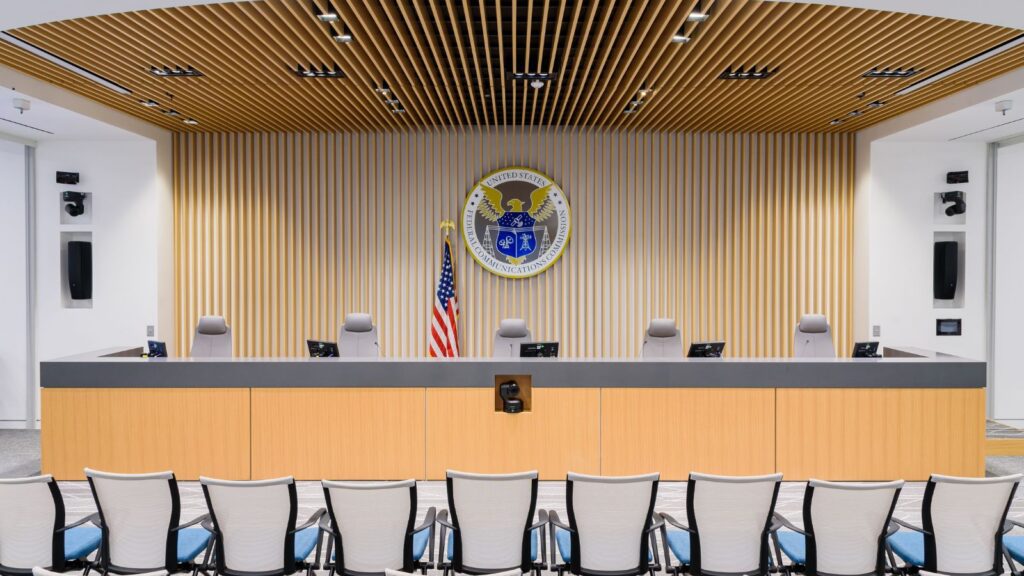
The FCC’s ruling doesn’t flip the switch overnight, but it does something arguably more consequential: it keeps the door open. AT&T has made clear that if its two pending petitions with the FCC are resolved in its favor, the company will begin withdrawing copper landline service across 360 wire centers in California on or after June 1, 2027. That target covers approximately 184,000 residential customers and 15,000 businesses, and those are just the accounts AT&T has specifically identified in its discontinuance applications.
This ruling is a direct challenge to California’s own regulatory stance. Last August, the California Public Utilities Commission ordered AT&T to maintain landline service. The FCC’s June 29 decision puts federal authority squarely at odds with that state order. AT&T has also filed suit against the CPUC and California’s Attorney General, arguing that the state has no power to stop the transition. The CPUC has pushed back hard, filing its own opposition with the FCC and challenging the new federal copper retirement rules in the U.S. Court of Appeals for the Ninth Circuit.
The stakes are high, and the arguments on both sides are serious. Opponents of the copper shutdown point out that landlines are often the last line of communication standing during earthquakes, wildfires, and other natural disasters, the exact scenarios California faces with alarming regularity. AT&T, for its part, argues that fiber and wireless alternatives are already available throughout the affected wire centers, that its copper infrastructure is increasingly obsolete, and that no carrier should be indefinitely required to maintain technology that the rest of the industry has moved on from.
What’s undeniable is the direction of travel. AT&T has already obtained regulatory relief for copper retirement across the bulk of its U.S. footprint. California remains the lone holdout. And earlier this year, the FCC adopted new rules specifically designed to remove regulatory barriers to copper network decommissioning, an unmistakable federal tailwind at AT&T’s back. To underscore the point, AT&T has committed to investing $19 billion in California through the end of the decade, upgrading more than 4 million additional households and businesses to fiber. That’s not a company hedging its bets. That’s a company that has already decided copper is over.
For businesses still relying on POTS lines for alarm systems, elevator phones, fax machines, fire panels, or any other life-safety or operational application this ruling is a loud and urgent signal that POTS replacement in California is no longer optional. Regulatory battles may shift the timeline but they will not reverse it.
MIX Networks has been preparing for this moment on behalf of our customers and partners since before most carriers were willing to say the word “sunset” out loud. Our POTS replacement solutions are purpose-built for organizations that cannot afford a gap in critical communications, not a temporary workaround, but a true, long-term alternative to copper analog lines. Our DataRemote 90X1 and 90X2 devices carry dual life-safety certification from both the FDNY Bureau of Fire Prevention and the California Office of the State Fire Marshal, making them among the most rigorously vetted POTS replacement options available for fire and life-safety applications.

The FCC just made it clear: copper is going away, and California’s regulatory shield is cracking. June 1, 2027 may feel distant, but compliance timelines, procurement cycles, and installation schedules have a way of compressing fast.
If you haven’t started your POTS replacement plan yet, especially if you’re operating in California, now is the time. Contact MIX Networks today and we’ll help you build a transition strategy that protects your operations, satisfies your compliance requirements, and keeps your communications running no matter what the carriers decide next.
Sources: SFist, Broadband Breakfast, California Public Utilities Commission